How Much Does a Tailored Suit Cost in Bangkok?
TL;DR
Price is driven by four things: fabric, construction method, how much handwork is involved, and where the suit is made. The same fabric and construction can vary several times over in price depending on location and labour costs.
“How much does a tailored suit cost” is a question with no single answer, which is exactly why it gets searched so often and answered so badly. Most guides either quote a range so wide it is useless, or quote their own prices and call it a market rate.
The more useful approach is to understand what you are paying for, because once you can see the components, you can judge whether any given quote is reasonable.
1. The Four Things That Actually Drive Price
Fabric and Mill
Fabric is often the largest single variable. A suit length of cloth from a standard mill and a suit length from a premium English or Italian mill can differ by several multiples for the same quantity.
Mill reputation accounts for some of this. So does fibre quality, weave complexity, and whether the cloth includes cashmere, silk or other blends. A plain worsted wool costs considerably less than the same weight in a wool and cashmere blend.
Ask which mill your fabric comes from. A tailor who cannot tell you is a tailor who does not know, which tells you something.
Construction: Fused, Half Canvas, Full Canvas
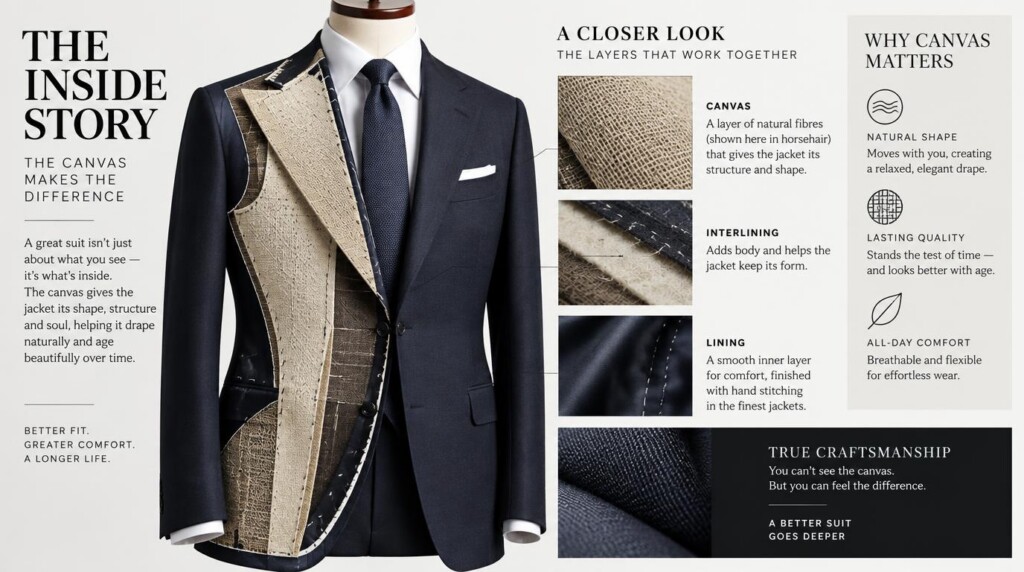
Inside every jacket is a layer that gives it shape. How that layer is attached is one of the biggest quality and price differentiators, and it is invisible from the outside.
Fused construction glues the interlining to the outer fabric. Cheapest, fastest, and prone to bubbling or separating over time, particularly in humid conditions.
Half canvas uses a stitched-in canvas through the chest and lapel, with fusing lower down. A reasonable middle ground and increasingly the default for good quality suits.
Full canvas stitches the canvas layer throughout. The jacket moulds to your body over time and holds its shape for years. Most expensive, most durable, and the standard for genuine bespoke.
Amount of Handwork
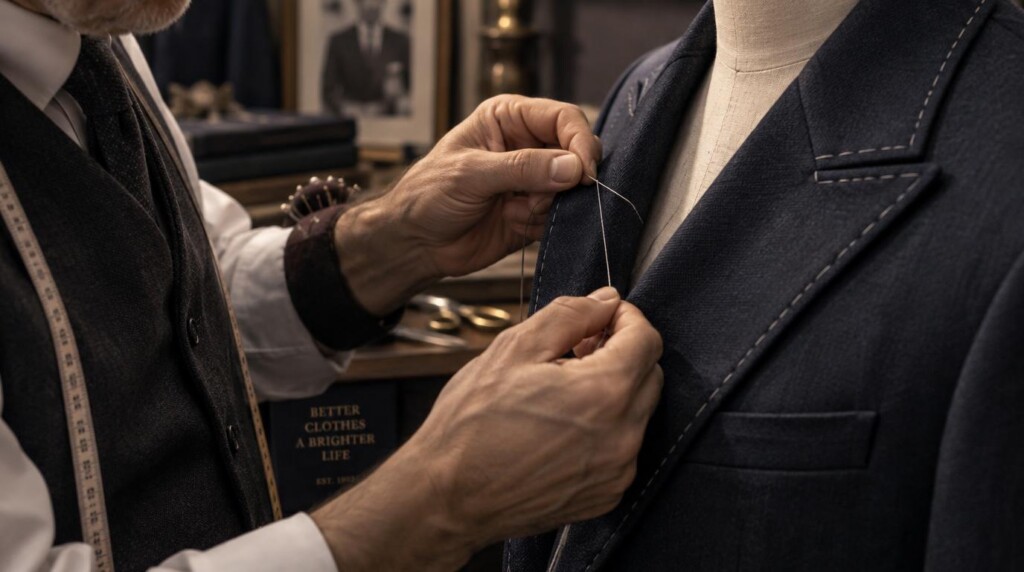
Machine stitching is fast and consistent. Hand stitching is slow and allows subtle shaping that machines cannot replicate.
Hand-attached collars, hand-padded lapels, hand-sewn buttonholes and hand-finished linings all add hours of skilled labour. Each of those hours has a cost.
This is where much of the price difference between a good suit and an excellent one sits, and it is also where the difference is hardest to see without knowing what to look for.
Where It Is Made

Labour rates vary enormously between countries. The same fabric, the same construction method and the same number of hand-finished details can carry very different prices depending on where the workshop is.
This is not a quality statement in either direction. It is an economics statement. A full canvas suit with hand-finished details made where labour costs less will cost less, without any difference in what you receive.
2. Tailored Suit Pricing Ranges by Type
Getting an accurate figure means giving a tailor enough detail to price it properly.
Here’s how to do that efficiently.
1. Decide what you actually need.
A single suit, a suit and shirts, or a full wardrobe changes the economics considerably, since fabric and fitting costs spread differently across a larger order.
2. Have a rough fabric idea, even a loose one.
You don’t need a mill name. “Something for a hot climate business suit” or “a heavier wool for winter” is enough for a tailor to point you toward a realistic price band before you’ve committed to anything.
3. Ask for construction upfront, not as an afterthought.
Request the price at half canvas and full canvas separately if both are offered. This one question does more to make quotes comparable than anything else, since construction is the single biggest hidden price driver and it’s rarely volunteered without asking.
4. Get the quote itemised.
Fabric, construction, and any hand-finishing should show as separate lines where possible. A single bundled number makes it impossible to tell why one tailor costs more than another.
5. Ask what’s included after delivery.
Alteration policy and time window matter as much as the upfront price, and this is exactly the kind of detail that turns two similar-looking quotes into very different value.
6. Compare quotes only against equivalent construction and fabric tier.
A fused-construction quote and a full-canvas quote are not competing offers for the same product, whatever the price difference suggests.
3. What Changes at Each Price Level
At entry level, expect fused construction, house fabrics with limited choice, and machine finishing throughout. The suit will look good initially and its lifespan will be limited.
In the middle, expect half or full canvas, a genuine fabric selection including named mills, and some hand finishing. This is where most people find the best balance.
At the top, expect full canvas, extensive handwork, premium mill fabrics, and multiple fittings with a pattern kept on file for future commissions.
4. Where Paying More Is Worth It
Canvas construction. The step from fused to half or full canvas is the single most meaningful upgrade in durability and how the jacket ages.
Fabric weight appropriate to your climate. Buying the wrong weight is expensive regardless of price, because you will not wear it.
Fit and fittings. More fittings mean a better result. This is labour, and labour is where the money goes.
5. Where Paying More Buys You Very Little
Extremely high Super numbers for daily wear. Super 180s and above feel wonderful and wear out quickly. For a suit worn weekly, a Super 110s to 130s is more practical and considerably cheaper.
Visible branding. You are paying for the name, not the garment.
Elaborate linings and details nobody sees. Enjoyable if you want them, but they do not affect fit, comfort or longevity.
Frequently asked questions
How much should a good tailored suit cost?
It varies widely by construction and location. Fabric and canvassing method affect the figure more than any other factor.
Why do prices differ so much between countries?
Labour and overhead costs vary significantly, which changes the price without necessarily changing the construction quality.
What is the difference between fused and canvassed construction?
A canvassed jacket has an internal layer stitched in that moulds to your body over time. A fused jacket uses adhesive instead, which is cheaper but less durable.
Is a more expensive suit always better made?
No. Price reflects fabric, brand and location as well as construction, so it is worth asking what you are actually paying for.